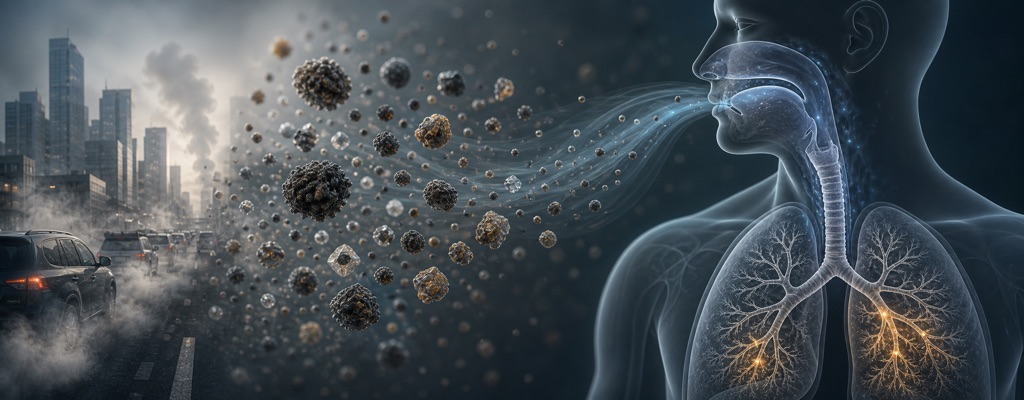
How Fine Particulate Matter Might Be the Cause
It happens to millions of people like clockwork: around 2:00 PM or 3:00 PM, a heavy wave of exhaustion sets in. Your eyelids feel heavy, concentrating on complex tasks becomes an uphill battle, and a dull, low-grade sluggishness takes over your entire body.
The standard assumption is almost always lifestyle-related. We blame the carb-heavy lunch we ate, assume we didn’t sleep well enough the night before, or reach for a second or third cup of coffee to force our way through the workday. But what happens when you slept eight full hours, ate a balanced meal, stayed hydrated, and still experience a crippling afternoon slump?
The missing variable is often floating silently in the air around you. Growing toxicological and epidemiological research demonstrates that low-grade exposure to fine particulate matter (2.5pm) triggers subtle systemic inflammatory cascades that directly alter cellular energy output, leading to what health scientists refer to as atmospheric fatigue.
The Biological Origin: How 2.5pm Causes Cellular Energy Crashes
To understand how air pollution causes physical exhaustion, we must look at how fine particulate matter interacts with human physiology. Fine particulate matter (2.5pm) consists of microscopic solids and liquid droplets measuring 2.5 micrometers or smaller—particles so small they easily bypass upper respiratory filters and travel deep into the lungs.
Once inside the alveoli, these particles cross the alveolar-capillary membrane directly into systemic blood circulation. This microscopic invasion sets off a chain reaction that directly impacts your energy levels:
1. Low-Grade Systemic Inflammation
When circulating immune cells encounter 2.5pm particles in the bloodstream, they treat these foreign chemical compounds as active threats. White blood cells release inflammatory signaling proteins called cytokines—including Interleukin-6 (IL-6) and Tumor Necrosis Factor-alpha (TNF-alpha). This produces low-grade, systemic inflammation throughout your vascular system.
2. Mitochondrial Dysfunction and Decreased ATP Output
Mitochondria are the powerplants inside your cells, responsible for generating adenosine triphosphate (ATP)—the primary energy currency of the human body. Research indicates that systemic oxidative stress caused by 2.5pm exposure impairs mitochondrial membrane potential. When mitochondria come under oxidative stress, ATP synthesis slows down, causing your body to experience deep, cellular-level physical exhaustion.
3. Reduced Oxygen-Carrying Capacity
Inhaled combustion particles and associated trace compounds irritate vascular endothelial walls, inducing slight vasoconstriction (narrowing of blood vessels). Combined with mild vascular inflammation, this reduces oxygen delivery efficiency to brain tissue and muscle groups, compounding feelings of physical and mental sluggishness.
INHALED 2.5pm PARTICLES            SYSTEMIC CYTOKINE RELEASE          MITOCHONDRIAL STRAIN
┌──────────────────────┐          ┌──────────────────────┐          ┌──────────────────────┐
│ Crosses Lung-Blood   │  ───►    │ Triggers IL-6 &      │  ───►    │ Slows ATP Production │
│ Barrier into Vessels │          │ TNF-alpha Cascade    │          │ = ATMOSPHERIC CRASH  │
└──────────────────────┘          └──────────────────────┘          └──────────────────────┘
Differentiating Post-Lunch Sluggishness from Atmospheric Fatigue
Because afternoon energy drops are common, learning to distinguish between routine post-meal digestion and air pollution-induced fatigue is essential for effective trigger management:
POST-LUNCH SLUGGISHNESS (DIET/SLEEP)
Characteristics: Onset typically occurs within 30 to 45 minutes after eating a heavy or high-glycemic meal. It is characterized by physical drowsiness that resolves naturally within 60 minutes as digestion settles or after light walking and hydration.
ATMOSPHERIC FATIGUE (2.5pm EXPOSURE)
Characteristics: Onset often correlates with daily ambient pollution cycles rather than meal times. It presents as a persistent, heavy “weighted” feeling accompanied by brain fog, mild tension behind the eyes, or scratchy throat irritation. Physical exhaustion persists for hours despite caffeine, hydration, or stretching, and resolves primarily when air quality improves or when moving into a HEPA-filtered environment.
A Step-by-Step Guide to Uncovering Your Triggers with SharedSky
Because fine particulate matter is invisible to the naked eye, connecting an afternoon slump to local pollution spikes requires structured tracking. Using the SharedSky app, you can cross-reference your personal energy ratings with hyper-local environmental data in a few simple steps:
Step 1: Set Up Afternoon Quick-Check Notifications
Configure a daily check-in prompt in SharedSky for mid-afternoon (e.g., 2:30 PM). Consistent time-stamped logging ensures your health data captures the exact window when daily urban pollution and atmospheric heat often peak.
Step 2: Log Energy Ratings and Physical Context
Take 15 seconds to submit a quick entry. Rate your current energy level on a simple scale (e.g., 0 for vibrant energy, 5 for severe exhaustion). Add quick tags specifying your immediate environment—such as “Outdoors for Lunch,” “Indoor Office,” or “HVAC Purifier On”.
Step 3: Automated Hourly Particulate Syncing
The moment you log your entry, SharedSky automatically attaches local hourly atmospheric metrics based on your location. The app captures real-time 2.5pm concentrations ($\mu\text{g/m}^3$), ground-level ozone (O3), temperature, and humidity.
USER LOG (2:30 PM): "Severe Energy Drop & Heavy Eyelids"
                          │
                          ▼
AUTOMATED METRIC SYNC:  [ 2.5pm: 42 µg/m³ (──► Unhealthy Spike) ]
                        [ Ozone: 58 ppb | Temp: 84°F             ]
Step 4: Analyze Your 14-Day Fatigue-Pollution Overlay
After logging for 14 consecutive days, open your SharedSky trends dashboard. The platform plots your energy ratings directly against local hourly 2.5pm feeds. Look for consistent patterns: Do your severe fatigue scores (rated 4 or 5) align with days when ambient 2.5pm levels exceeded 35 $\mu\text{g/m}^3$?
Step 5: Implement Targeted Preventive Controls
If your trend chart confirms a link between 2.5pm spikes and energy crashes, take proactive measures:
- Run HEPA Filtration: Keep a certified True HEPA air purifier running in your workspace to maintain low indoor 2.5pm levels.
- Limit Peak Outdoor Exposure: Avoid taking outdoor walks or running errands during late-afternoon urban traffic spikes.
- Support Anti-Inflammatory Recovery: Stay thoroughly hydrated and discuss anti-inflammatory dietary support with your healthcare provider to help buffer systemic oxidative stress.
Take Back Your Afternoon Vitality
Unexplained fatigue is your body’s way of responding to internal stress. By recognizing how fine particulate matter affects systemic inflammation and energy output, you can stop guessing and start taking targeted control of your environment.
Is air pollution draining your afternoon energy? Start logging your daily physical baseline in SharedSky today and uncover your hidden triggers.